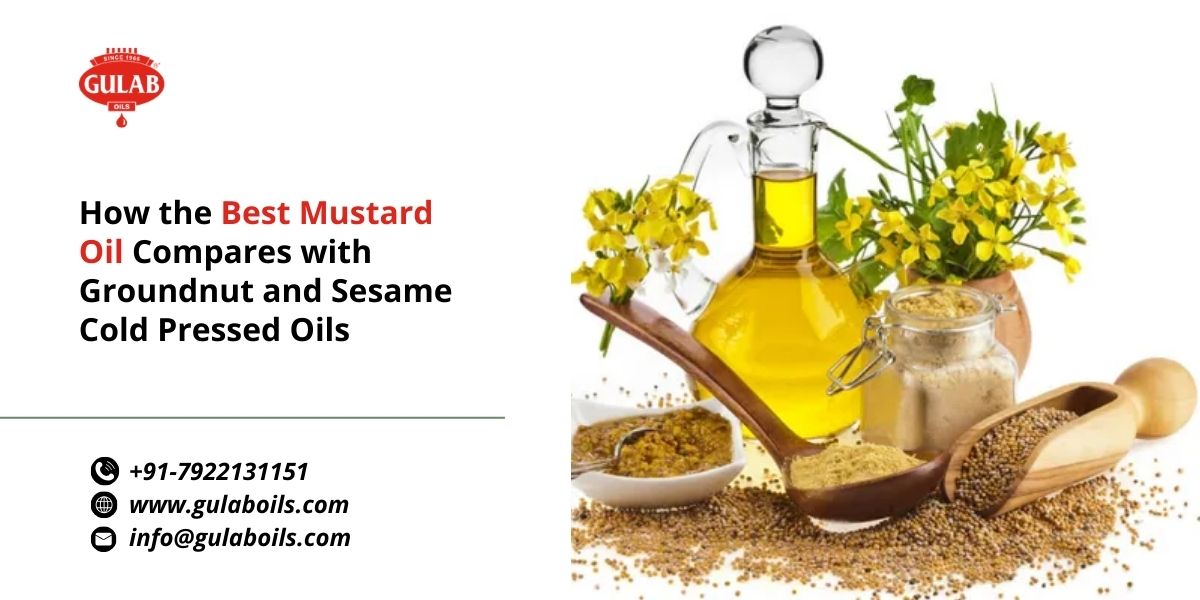
 Cooking oils are an essential part of daily food preparation, and the type of oil used can significantly influence both flavor and cooking performance. In Indian kitchens, traditional oils such as mustard oil, groundnut oil, and sesame oil have been used for generations. Each oil has its own characteristics, flavor profile, and cooking benefits that make it suitable for specific dishes and cooking methods.
Among these options, mustard oil continues to hold a special place in many households. Known widely as Sarson Ka Tel, it is valued for its strong aroma and compatibility with traditional Indian recipes. Many consumers today search for the best mustard oil ↗ to ensure quality and authenticity in their cooking.
This article compares mustard oil with groundnut and sesame cold pressed oils to help readers understand their differences, uses, and benefits in everyday cooking.
Understanding Mustard Oil
Mustard oil is extracted from mustard seeds and is commonly used in Indian cooking. It has a distinct aroma and slightly pungent taste that adds depth to many traditional dishes.
Sarson Ka Tel is especially popular in northern and eastern India, where it is used in a wide variety of recipes including curries, vegetable preparations, and pickles.
Consumers can find mustard oil in different forms, including traditional varieties and refined mustard oil. While traditional oil retains a stronger flavor, refined mustard oil undergoes additional processing to produce a milder taste and clearer appearance.
Both types are widely used depending on cooking preferences.
Groundnut Oil and Its Culinary Role
Groundnut oil, also known as peanut oil, is extracted from peanuts and is widely used in Indian cooking due to its mild flavor and versatility.
This oil works well in dishes where a neutral taste is preferred. Because of its relatively stable cooking properties, groundnut oil is commonly used for frying, sautéing, and preparing snacks.
In many households, groundnut oil is considered a practical choice for everyday cooking because it does not overpower the flavor of spices and ingredients.
Sesame Oil in Traditional Cooking
Sesame oil is another traditional cooking oil widely used in Indian and Asian cuisines. It is known for its nutty aroma and distinctive taste.
Cold pressed sesame oil is commonly used in:
-
South Indian cooking
-
Traditional pickles
-
Certain regional vegetable dishes
Because sesame oil has a strong flavor, it is often used in smaller quantities to enhance the overall taste of a dish.
Key Differences Between Mustard, Groundnut, and Sesame Oils
Although these oils are commonly used in Indian kitchens, they differ in several ways.
Flavor Profile
Mustard oil has a bold and pungent flavor that significantly influences the taste of dishes. This strong character makes it ideal for traditional recipes where flavor intensity is desired.
Groundnut oil has a mild taste that allows spices and ingredients to stand out. It is often chosen for dishes where a neutral cooking oil is preferred.
Sesame oil offers a nutty aroma and is frequently used to add depth to certain regional cuisines.
Cooking Applications
Each oil performs differently depending on the cooking method.
Mustard oil is widely used for:
-
Traditional curries
-
Pickle preparation
-
Frying snacks
Groundnut oil is commonly used for:
-
Deep frying
-
Everyday vegetable dishes
-
Snack preparation
Sesame oil is often used for:
-
Stir frying
-
Tempering spices
-
Flavoring regional recipes
Choosing the best mustard oil or other cooking oils often depends on the type of cuisine and cooking style.
Mustard Oil and Traditional Indian Recipes
Sarson Ka Tel is deeply connected with Indian culinary traditions. Many regional dishes rely on this oil to achieve authentic taste.
Some common recipes that use mustard oil include:
-
Fish curry in eastern Indian cuisine
-
Vegetable stir fry in northern Indian kitchens
-
Traditional pickles prepared during seasonal harvests
The oil’s strong aroma enhances spices such as cumin, turmeric, and mustard seeds, creating a distinctive flavor that defines many traditional dishes.
Because of this cultural connection, mustard oil remains an important ingredient in Indian cooking.
Refined Mustard Oil in Modern Kitchens
In addition to traditional mustard oil, refined mustard oil has become increasingly popular in modern households.
Refined mustard oil undergoes purification processes that remove impurities and reduce the strong aroma of raw mustard oil. This makes it suitable for people who prefer a milder taste.
Some advantages of refined mustard oil include:
-
Smoother texture for cooking
-
Lighter flavor for diverse recipes
-
Consistent quality for everyday use
As a result, many households choose refined mustard oil for daily cooking while reserving traditional mustard oil for regional dishes.
Choosing the Best Mustard Oil for Cooking
Selecting the best mustard oil involves considering several factors related to quality and cooking preferences.
When choosing mustard oil, consumers often look for:
-
Reliable manufacturers that follow proper production standards
-
Clear labeling and quality certification
-
Packaging that protects oil from contamination
Consumers may also evaluate whether they prefer traditional mustard oil with a stronger flavor or refined mustard oil with a milder taste.
These choices depend largely on personal preference and cooking style.
Benefits of Using Mustard Oil in Everyday Cooking
Many households continue to use mustard oil because of its practical and culinary advantages.
Some commonly recognized benefits include:
-
Distinct flavor that enhances traditional recipes
-
Versatility for frying, sautéing, and pickling
-
Long-standing use in Indian cooking culture
These characteristics contribute to the continued demand for mustard oil in India.
Balancing Different Cooking Oils in the Kitchen
Many cooks prefer to keep multiple oils in their kitchens to suit different cooking methods.
For example:
-
Mustard oil may be used for regional dishes and pickles
-
Groundnut oil may be used for frying snacks
-
Sesame oil may be used for flavoring specific recipes
Using different oils allows cooks to achieve the best results depending on the dish being prepared.
Conclusion
Cooking oils are an essential part of culinary traditions, and each oil offers unique characteristics that influence flavor and cooking performance. Mustard oil, commonly known as Sarson Ka Tel, stands out for its bold aroma and deep connection with traditional Indian recipes. When compared with groundnut and sesame cold pressed oils, mustard oil continues to play a significant role in regional cuisines and everyday cooking.
Consumers today can choose between traditional varieties and refined mustard oil depending on their taste preferences and cooking methods. Understanding these differences helps households select the best mustard oil for their kitchens while also exploring other oils for specific recipes.
For those seeking reliable and high-quality cooking oils, Gulab Oils ↗ provides trusted products designed for everyday use. To learn more about our range of edible oils or explore the right option for your kitchen, connect ↗ with Gulab Oils and discover quality cooking oils that support traditional and modern cooking needs.